ARM7TDMI
32-bit RISC at 16.78 MHz. Runs 32-bit ARM code or compact 16-bit Thumb code — most games live in Thumb to save cartridge bus bandwidth.
Hardware hall
The smallest, with swappable faceplates. Three models, one 32-bit heart. Take them apart layer by layer, compare every spec, and see how the chips, memory and cartridges fit together.
GBA vs SP vs Micro — and how to tell an AGS-001 from an AGS-101 →
Schematic: the parts and layer order follow the real hardware; the shell is an original illustrative shape, not the real design. Hover a part to see what it does.
| GBA | GBA SP | Micro | |
|---|---|---|---|
| Launch | JP Mar 21 2001 · NA Jun 11 2001 · EU Jun 22 2001 | JP Feb 14 2003 · NA Mar 23 2003 · EU Mar 28 2003 | JP Sep 13 2005 · NA Sep 19 2005 · EU Nov 4 2005 |
| Form factor | Landscape slab | Clamshell | Landscape, swappable faceplate |
| Screen | 2.9" reflective TFT, 240×160 | 2.9" reflective TFT, 240×160 | 2.0" TFT, 240×160 |
| Light | None | Front light (AGS-001), backlight (AGS-101) | Backlight, adjustable brightness |
| Power | 2 × AA | Built-in Li-ion, ~3 h charge | Built-in Li-ion, ~2.5 h charge |
| Battery life | About 15 h | 10 h light on · 18 h light off | 6–10 h |
| Size | 144.5 × 82 × 24.5 mm | 84 × 82 × 24.4 mm (closed) | 101 × 50 × 17.2 mm |
| Weight | 140 g | 142 g | 80 g |
| Headphones | 3.5 mm jack | Adapter needed (no jack) | 3.5 mm jack |
| Plays | GBA · GBC · GB | GBA · GBC · GB | GBA only |
| Processor | ARM7TDMI 16.78 MHz (shared by all models) | ARM7TDMI 16.78 MHz (shared by all models) | ARM7TDMI 16.78 MHz (shared by all models) |
Every model shares the same CPU AGB chip; only the screen, power and shell changed.
32-bit RISC at 16.78 MHz. Runs 32-bit ARM code or compact 16-bit Thumb code — most games live in Thumb to save cartridge bus bandwidth.
The 8-bit Game Boy core, 4.19 / 8.38 MHz. Switched on only when a GB or GBC cartridge is inserted; the ARM sleeps.
240×160 at 59.73 Hz, 15-bit colour. Six modes: three tile modes and three bitmap modes. Up to 4 background layers and 128 sprites, with hardware rotation, scaling and alpha blending.
Four Game Boy channels (two square, wave, noise) plus two 8-bit PCM "Direct Sound" channels fed by DMA. Mono speaker, stereo through headphones.
Four DMA channels move data without the CPU — audio streaming, sprite updates, scanline effects. Four 16-bit timers drive sample rates and game clocks.
Serial port for link cables: up to four players in multiplayer mode, plus the 2004 Wireless Adapter and the GameCube link.
0x00000000BIOS16 KBBoot logo, maths and decompression routines0x02000000External WRAM256 KB16-bit bus, slower — big buffers0x03000000Internal WRAM32 KB32-bit, on-chip, fastest — hot code0x04000000I/O registers1 KBVideo, sound, DMA, timers, keys0x05000000Palette RAM1 KB512 colours: 256 background + 256 sprite0x06000000VRAM96 KBTiles, maps and bitmaps0x07000000OAM1 KB128 sprite entries0x08000000Game Pak ROM32 MBUp to 32 MB, read straight from the cartridge0x0E000000Game Pak save64 KBSRAM / Flash window, 8-bit busBar length is on a log scale — the cartridge is 2,000× larger than the BIOS.
A Game Pak is ROM plus a save chip — and sometimes a sensor the console never had.
Kept alive by a coin cell — the battery eventually dies.
No battery needed. 128 KB chips are bank-switched (Pokémon).
Cheap and small, written bit by bit over DMA.
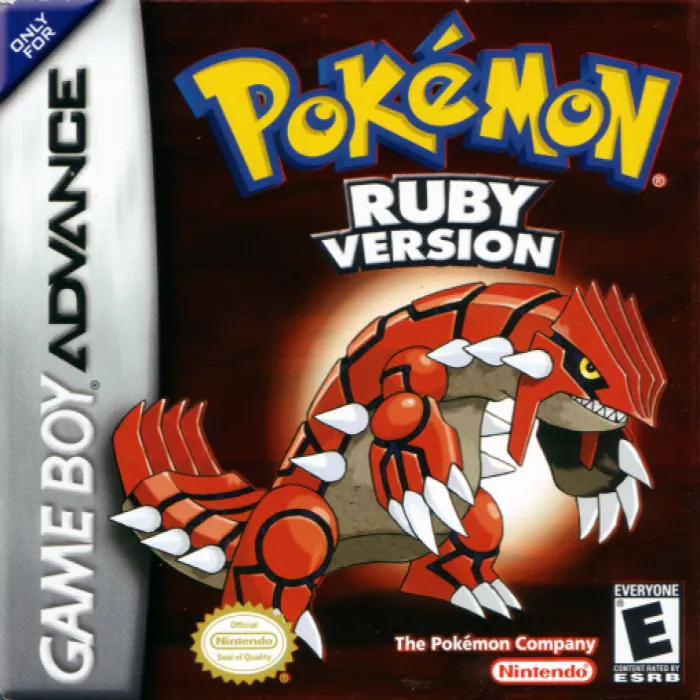
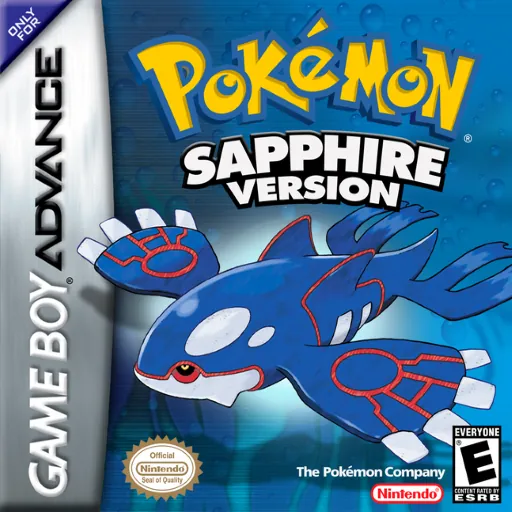
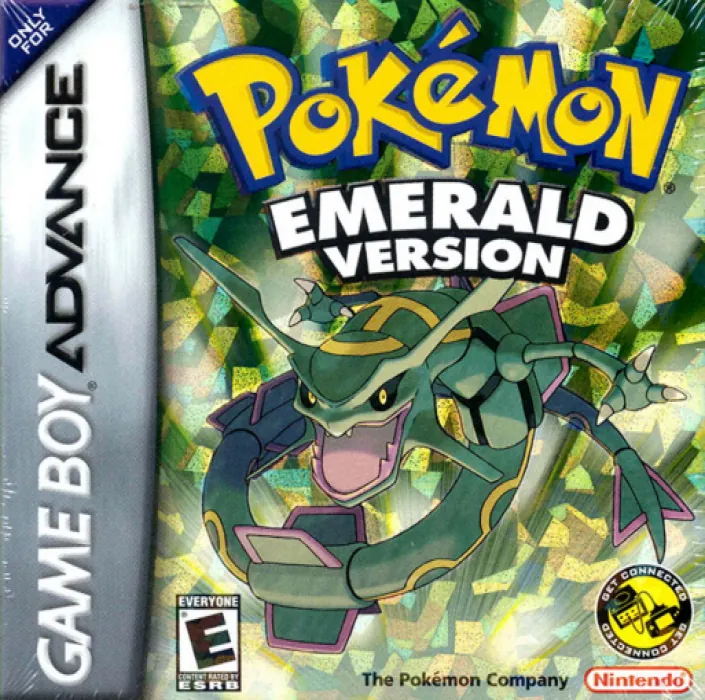
A clock chip on the cartridge keeps time while the system is off, driving day/night and timed events.


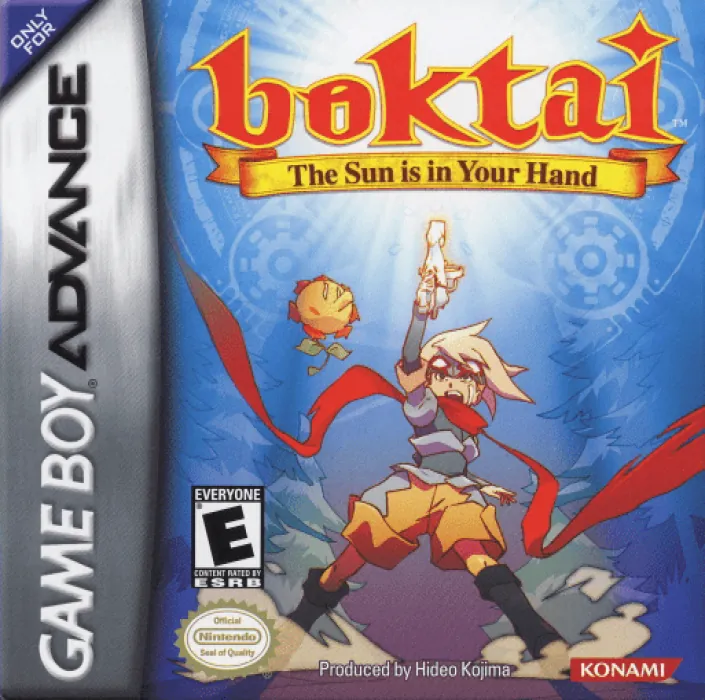
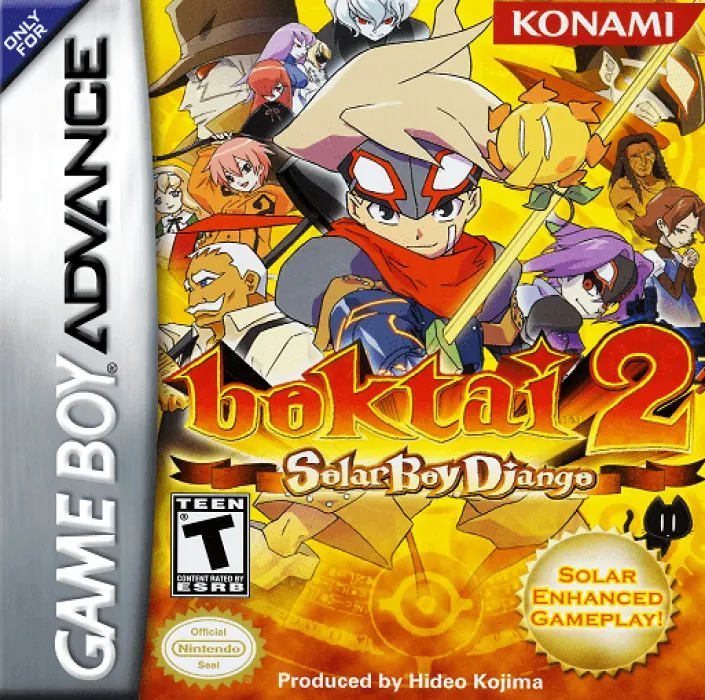
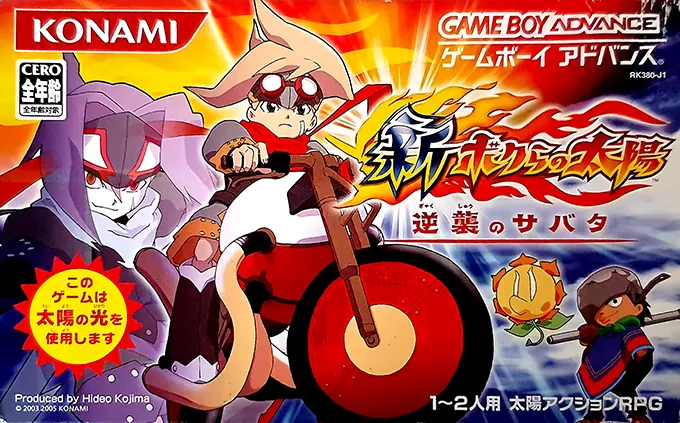
A light sensor on top of the cartridge: real sunlight charges your weapon in the game.



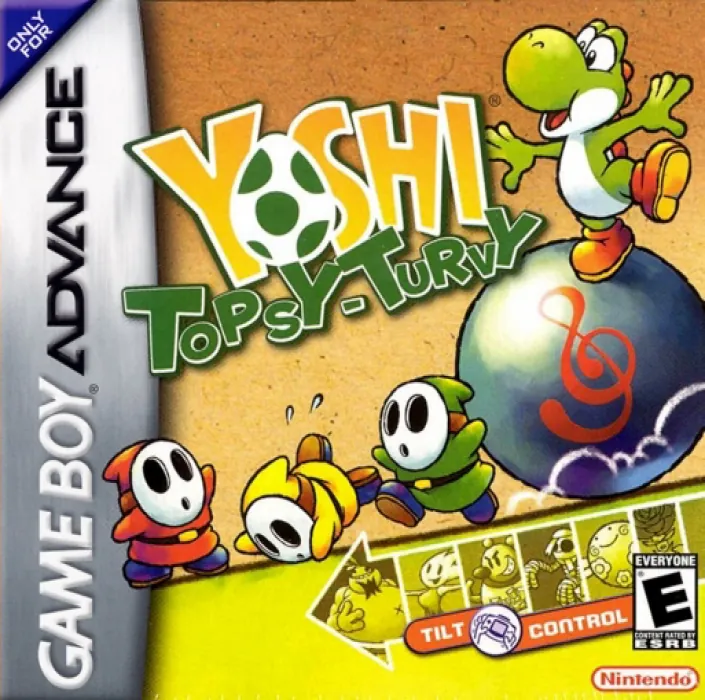
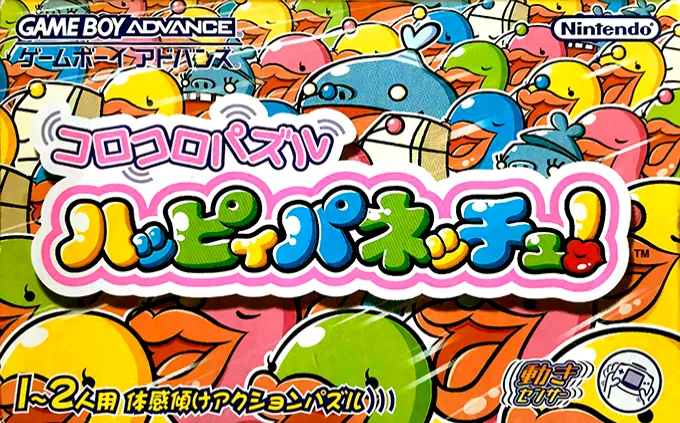
An accelerometer in the cartridge — tilt the whole system to roll the world.


A gyroscope reads rotation, so you turn the console like a steering wheel or a crank.
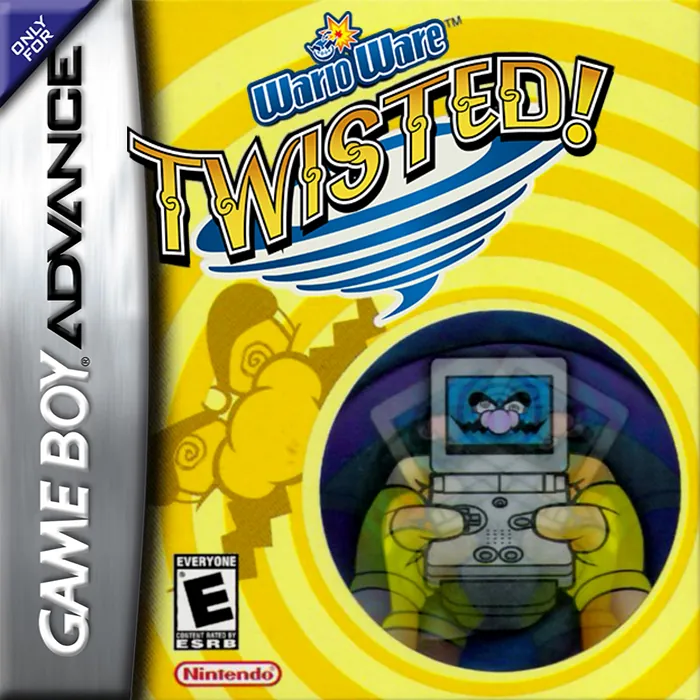

A motor inside the cartridge shakes on every drill hit — rare on a handheld in 2005.


81.51 million units sold, whole family